Running a commercial kitchen near the dense dining hubs of Hillcrest, North Park, or Pacific Beach exposes structures to relentless pest pressure from shared alleyways, canyon rims, and historic utility penetrations.…
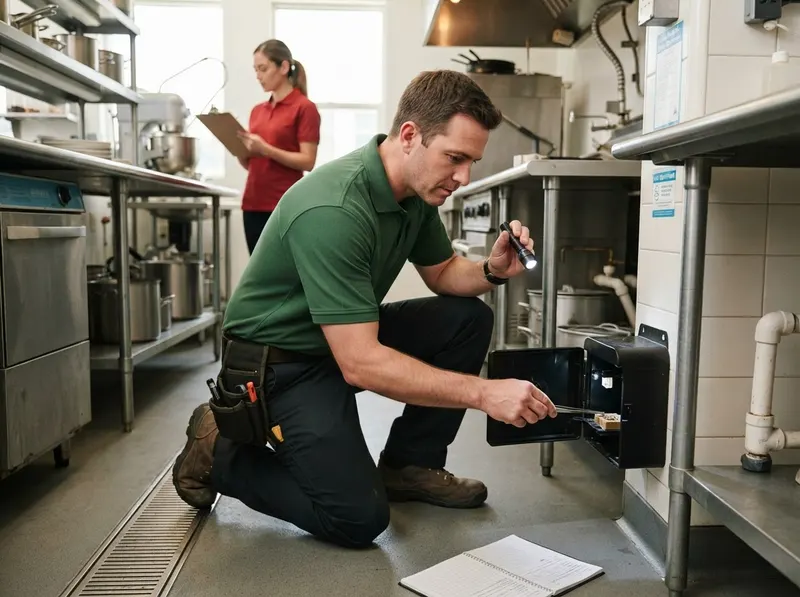
Running a commercial kitchen near the dense dining hubs of Hillcrest, North Park, or Pacific Beach exposes structures to relentless pest pressure from shared alleyways, canyon rims, and historic utility penetrations. Commercial food facility pest compliance treats pest management as architectural defense rather than chemical broadcasting. Kitchen managers facing sudden fruit fly blooms around beverage lines or American cockroach entry from aging municipal sewer lines need protective sanctuary protocols that safeguard guest health without contaminating food-contact surfaces. In historic structures along Old Town San Diego State Historic Park or coastal locations in Ocean Beach, standard baseboard chemical spraying fails health audits and fails to stop pests traveling through subfloors. True compliance focuses on sealing grease-trap wall voids, repairing 1/4-inch floor-drain escutcheon gaps, and reinforcing perimeter dock doors with durable brush sweeps.
Decision-fit guidance depends on kitchen square footage and operational risk. A boutique café operating in a 1,200-square-foot footprint in Clairemont requires targeted insect light traps (ILTs) and dry-drain microbial remediation, balancing tight operating margins with absolute pass-fail health inspections. Conversely, high-volume venues across La Jolla or waterfront establishments in Point Loma demand comprehensive HACCP-aligned digital logbooks, barcode-scanned trap lines, and dual-zone bait perimeters to protect brand reputation against open-canyon rodent corridors. The core operational trade-off centers on passive trapping versus mechanical exclusion: mechanical barrier installation requires upfront physical repairs to doorways and drywall penetrations, but it permanently eliminates the pest harborage paths that chemical treatments only temporarily mask.
Multi-unit operators in Carmel Valley, Scripps Ranch, and Rancho Bernardo face strict corporate third-party audits alongside local inspections. Our protocol documents every trap check, device catch count, and corrective action in a standardized format ready for immediate inspector review. Step one involves an exhaustive facility survey mapping every moisture source, floor drain, and electrical conduit entering from exterior brush lines. Step two deploys non-chemical mechanical capture and physical entry-point sealing using copper mesh, silicone sealant, and stainless steel hardware cloth. Step three establishes scheduled verification visits with real-time digital trap logs, ensuring complete compliance records without trapping operators in inflexible, high-chemical spray subscriptions.
Every job gets a firm, written price after a free on-site visit.
Tell us about your commercial food facility pest compliance job in San Diego and we'll send a clear, written quote, usually the same day.
 Canyon Finch Pest Control